
20 Ducks with Black And White Heads (with Pictures & ID Guides)
Black and white colors sit at the opposite ends of the visual spectrum, so when they’re paired, everything looks sharper, clearer, and more defined. That’s why black-and-white color combinations always feel bold and satisfying. It’s also this natural, striking contrast that makes ducks with black-and-white heads stand out any time we spot them.
But beyond the beauty, any outstanding plumage color serves other biological purposes in birds. The striking black-and-white head pattern in ducks, for instance, plays an important role during courtship. It helps these birds to be recognized by potential mates, especially during the breeding season. Apart from courtship roles, these same patterns may also help intimidate rivals or confuse predators.
But which duck species show black-and-white heads?
Below is a list of 20 species that display this eye-catching contrast. Some are familiar because we see them every day in local ponds and parks, while others are rarer.
- 1. Bufflehead
- 2. Hooded Mergansers
- 3. Long-tailed Duck
- 4. Common Eider
- 5. Muscovy Duck
- 6. Steller’s Eider
- 7. White-faced Whistling Duck
- 8. White-headed Duck
- 9. Harlequin Duck
- 10. Smew
- 11. Common Goldeneye
- 12. Ancona Duck
- 13. Ruddy Duck
- 14. Surf Scoter
- 15. Blue-winged Teal
- 16. Pacific Black Duck
- 17. Knob-billed Duck
- 18. Spot-billed Duck
- 19. Puna Teal
- 20. Pink-eared Duck
1. Bufflehead
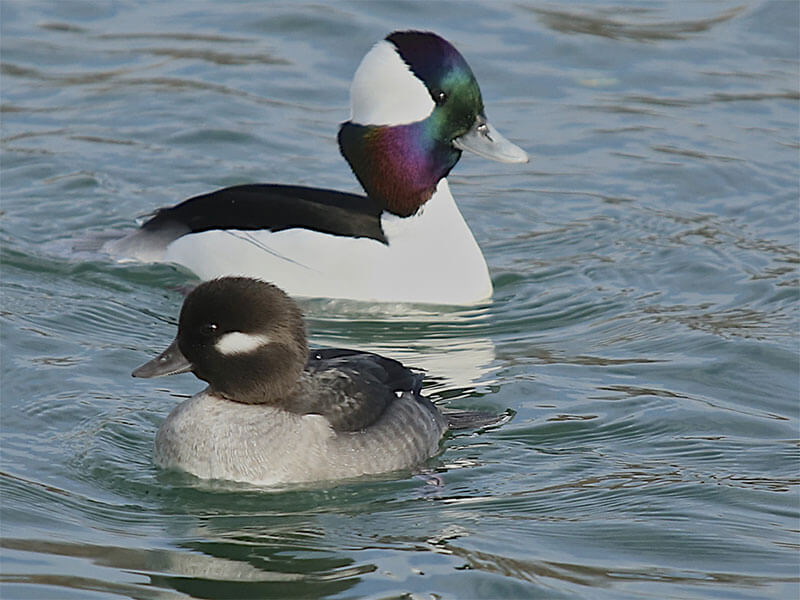
Buffleheads are popular for their oddly bulbous head shape (especially in drakes), which is both unique and beautiful.
But it’s not just their oversized heads that make these small sea ducks memorable at first sight. The color combination of the head is just as striking: bold black-and-white that instantly stand out. In good light, the head also shimmers with hints of green and purple, giving it an iridescent glow.
Females are more subdued, with soft grey tones and a smaller white patch near the eye.
They mostly breed in Alaska and Canada, then winter across southern North America. Because of their small size, they’re noticeably more active than many other ducks. You’ll often see them making continuous dives, powered by their high metabolism. Rather than gathering in huge flocks, they tend to stick to small, lively groups, adding to their energetic charm.
2. Hooded Mergansers
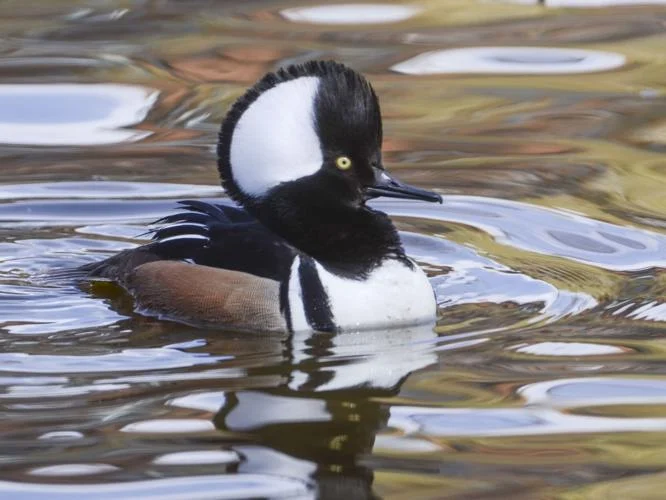
This is the second-smallest species of the mergansers, and the only one whose native range is restricted to North America. Like the Bufflehead, it’s also popular for its distinctive head, especially the striking crest, which it can raise or lower at will. Both sexes of the hooded merganser have this crest.
In breeding plumage, the male’s head pattern is even more striking: it is mostly black but it is beautifully highlighted by bold white patches on either side of the large crest. This sharp black-and-white contrast makes them easy to spot, even from a distance.
Females, on the other hand, have a softer look, with grey-brown heads and a warm reddish-brown crest. They also show a subtle white patch near the lower breast.
These ducks are short-distance migrants and typically winter in ice-free ponds, lakes, and rivers in the United States (i.e regions where temperatures remain mild enough to keep ponds, lakes, and rivers ice-free).
3. Long-tailed Duck
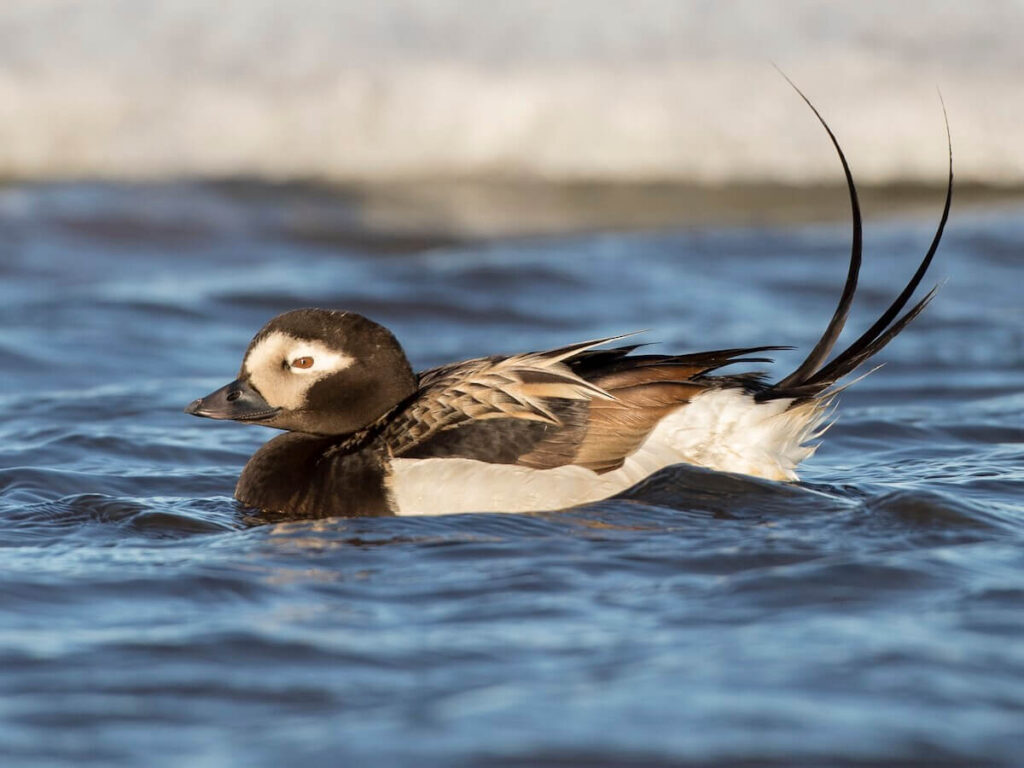
Named after its unusually long, pointed tail (measuring up to 10–15 cm), the Long-tailed Duck is another sea duck with a stunning black-and-white head.
The males show off a striking black and white head pattern and overall plumage that shift with the seasons. In winter, for instance, their heads are mostly white with a dark cheek patch, while in summer they turn darker, with a bold white cheek.
Female plumage is more subdued with brown backs and white winter heads capped by a dark crown.
They breed mainly in the tundra and taiga regions of the Arctic, then migrate to winter along the northern coastlines of the Atlantic and Pacific Oceans.
4. Common Eider
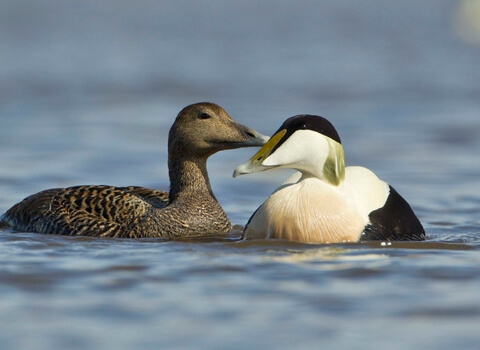
Also referred to as St. Cuthbert’s Duck or Cuddy’s Duck, the Common Eider is the largest of the four eider species. Males have dramatic yet beautiful black-and-white head markings that contrast sharply with their overall plumage (which is also black and white). Females are more muted, with warmer, softer tones, but still show a subtle mix of light and dark feathers on the head.
They breed in Arctic and some northern temperate regions, then move somewhat farther south into temperate zones for winter, where they can gather in large flocks along coastal waters. Their diet mainly consists of crustaceans and molluscs, with mussels being their favorite.
5. Muscovy Duck
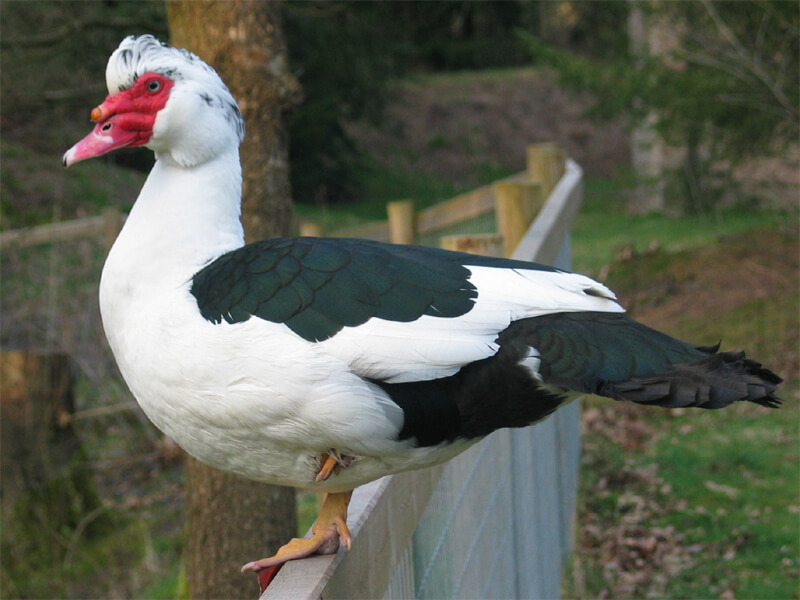
Muscovy Ducks are among the most common native ducks of the Americas, with domestic varieties (also known as pato criollo in Spanish) having been bred since pre-Columbian times. They come in a wide range of plumage colors, but many are predominantly black, often with large white patches on the wings. In breeding males, the dark feathers can appear glossy and iridescent, adding to their striking look, while females tend to be more subdued in comparison.
The heads of some Muscovies show a mix of black-and-white feathers, along with the species’ distinctive red facial caruncles.
Feral Muscovies are highly adaptable and often breed near urban and suburban ponds, lakes, and farms. They nest in a variety of places, including tree cavities, apartment balconies, under yard shrubs, or even beneath roof overhangs.
6. Steller’s Eider
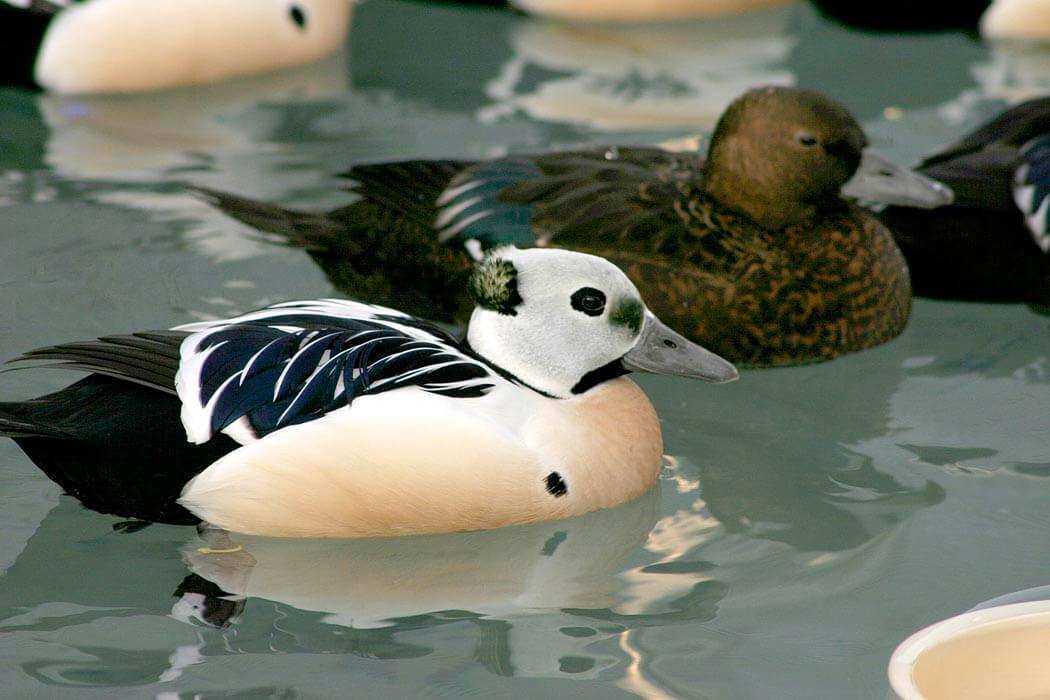
If you’re exploring Arctic waters, the Steller’s Eider is one of the stunning sea ducks you’re likely to come across. It is the smallest of the eiders, and also the fastest-flying species in the group. These birds are migratory, breeding along the coastlines of Russia and Alaska, as well as around parts of the Baltic Sea.
Males in breeding plumage display a striking black-and-white head pattern, with a black cap, chin, and throat set against a mostly white face and shoulders. Soft green patches behind the head add an extra touch of color. Females are more understated, with brownish heads and a pale white eye-ring, yet still show a gentle mix of light and dark tones on the head.
7. White-faced Whistling Duck
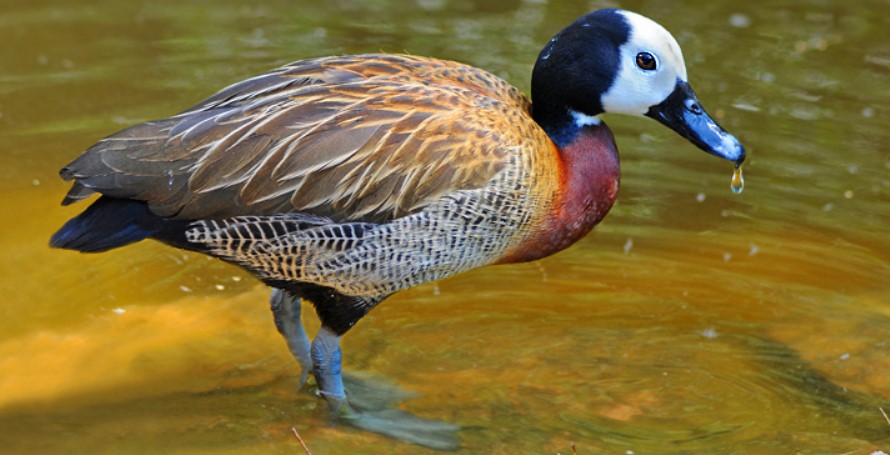
The White-faced Whistling Duck is named for its distinctive white face, though the amount of white can vary somewhat across its range. This bright face contrasts sharply with the black head and neck, creating a bold and instantly recognizable head pattern. Both males and females share this striking look, which stands out against their darker brown wings and back. Juvenile plumage is similar to that of adults, but the head shows less contrast.
Like other whistling ducks, they are known for their noisy nature and characteristic clear, three-note whistling calls. They also have an unusual, disjunct distribution, occurring and breeding in sub-Saharan Africa and much of South America.
8. White-headed Duck
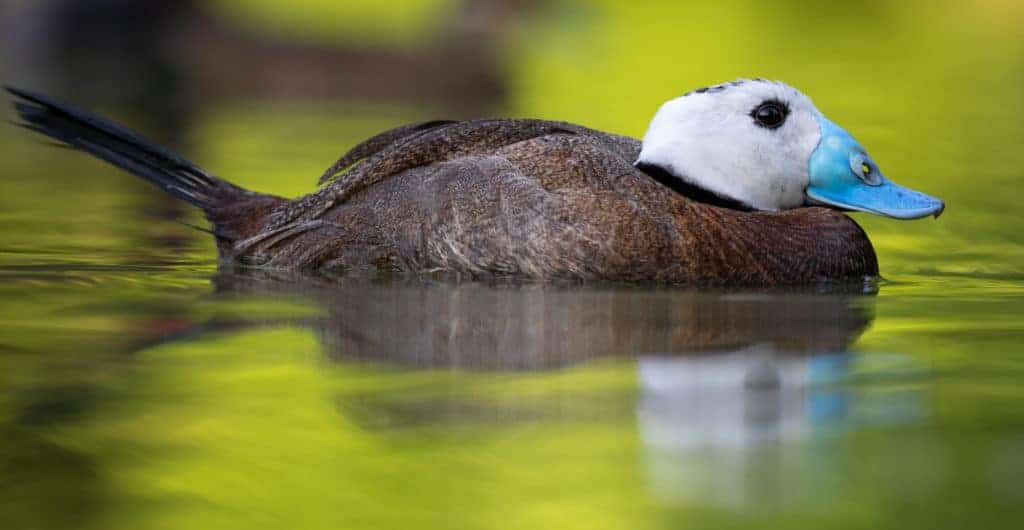
As their names suggest, the heads of the drakes of these small diving duck species are mostly white. But look a little closer and you’ll notice touches of black on their caps and necks. Their overall plumages have soft reddish-grey tones, and the bills are distinctly blue. Females White-headed Ducks are duller in comparison, with more muted colors and darker bills.
You’re most likely to spot them in parts of Spain, North Africa, Western Asia, and Central Asia. They are considered an endangered species by the International Union for Conservation of Nature, with populations declining mainly due to habitat loss and pollution.
Discover other endangered duck species: 17 Most Endangered Ducks in the World According To IUCN Red List
9. Harlequin Duck
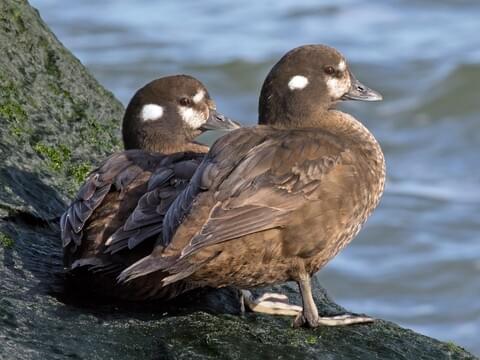
The male Harlequin Duck is one of the prettiest ducks in the world, thanks to its colorful and complex plumage pattern. The head is a dark slate blue, marked by a large white crescent in front of the eye that extends up toward the crest, a small round spot behind the eye, and a larger oval patch along the side of the neck.
The female, while less colorful, still shows a bold and distinctive head pattern. She has three clear white patches: one round spot behind the eye, a larger patch running from the eye to the bill, and a small spot above the eye. This unique pattern makes her stand out in her own right, which is also why the species is included in this list.
Harlequin Ducks breed in cold, fast-moving streams across northwestern and northeastern North America, Greenland, Iceland, and eastern Russia.
10. Smew
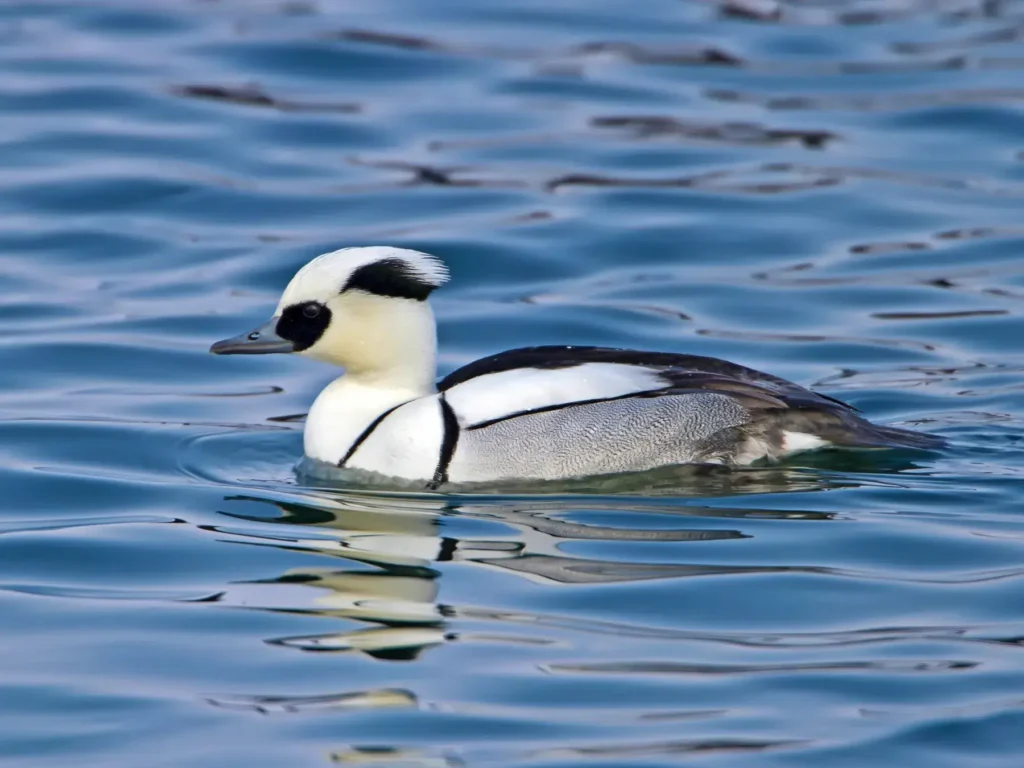
The Smew looks almost like a little flying panda. Adult males are mostly white, with bold black markings on the head and body that give them a sharp black-and-white appearance in flight. Females and young males are greyer overall, but still show a white face with dark patches around the eyes.
Smew prefer fish-rich lakes and slow-moving rivers, and they typically breed across the Palearctic, in the northern taiga stretching from northern Scandinavia all the way to Chukotka.
Duck Identification Posters/Charts
Celebrate the beauty of ducks with detailed, high-resolution identification posters designed for both learning and decor. Each chart features vibrant colors, sharp details, and a smooth premium finish that’s perfect for classrooms, study spaces, living rooms, or offices.

11. Common Goldeneye
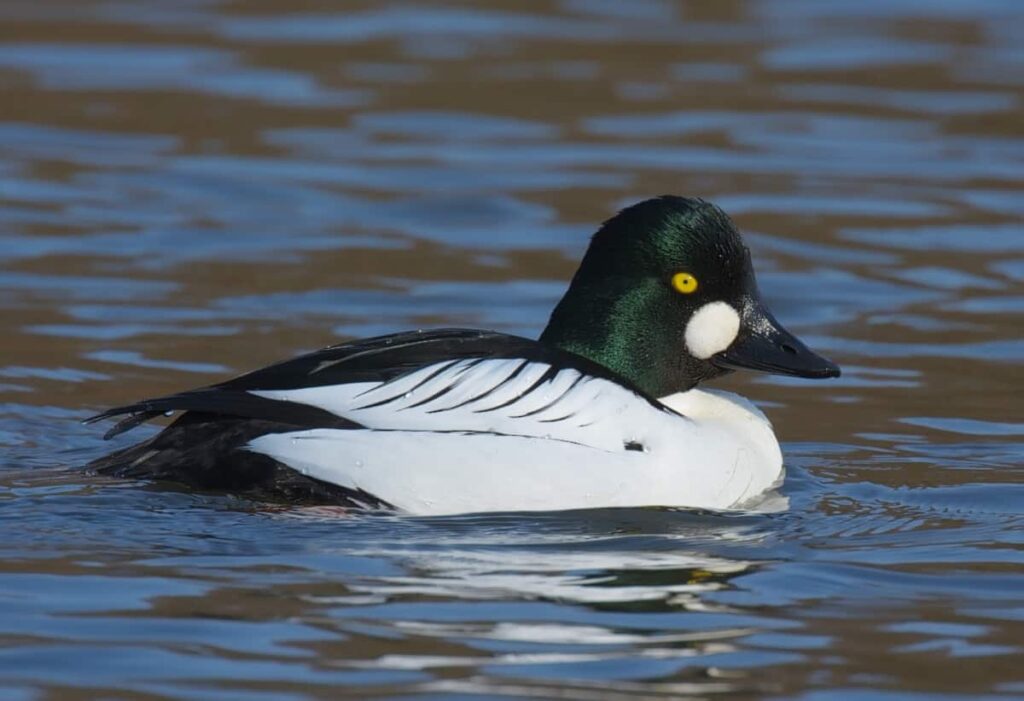
The first thing most birders notice when they spot this medium-sized sea duck is its bright golden eyes, the signature feature the species is named after. Its large, bulbous head is also hard to miss, especially with its greenish gloss and a crisp white patch below the eye, all of which contrast beautifully with its black back and white belly.
Females are more subtle, with a brown head and mostly grey body, though you can still notice the clean, defined head pattern.
Common Goldeneyes are known to nest in tree cavities, particularly those formed in broken limbs or created by large woodpeckers (mostly Pileated Woodpeckers or Black Woodpeckers).
Discover other ducks that nest in tree cavities: 23 Ducks That Nest In Trees
12. Ancona Duck
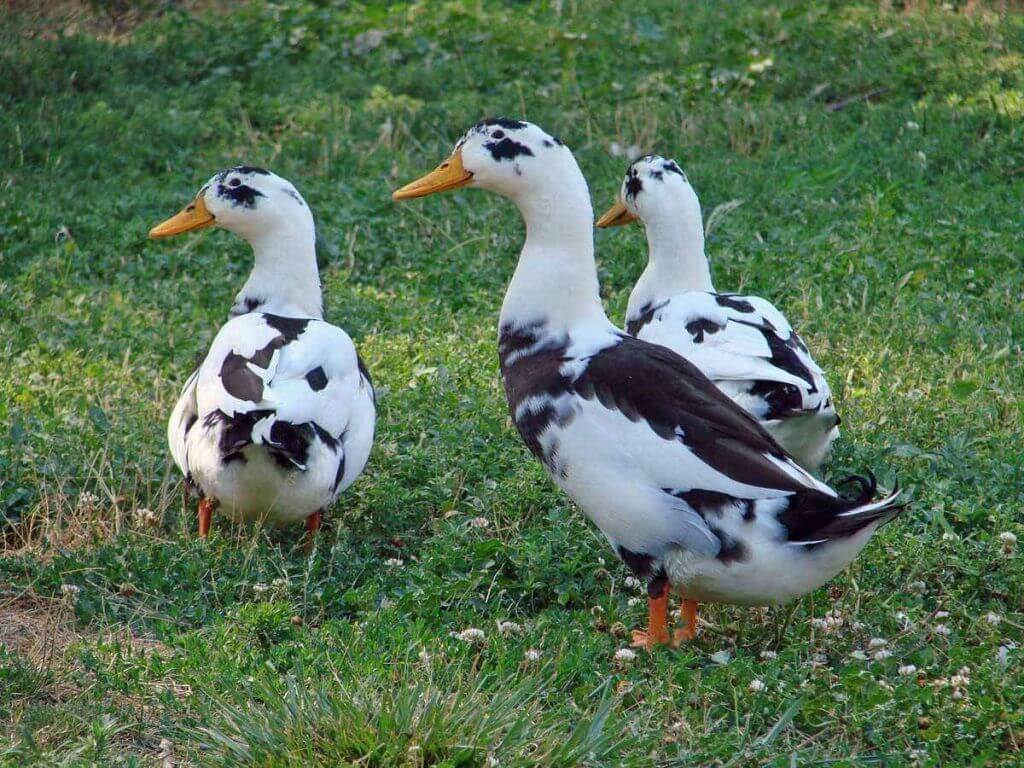
Ancona ducks are domestic ducks with distinct, patchy looks that make each one unique. Many Anconas show black-and-white patterns on their heads, though the exact markings can vary from bird to bird. Some may have mostly white faces with black spots, while others have a more balanced mix of the two colors. Their playful, broken-colored plumages continue across the body, giving them striking and distinctive appearances. Anconas are excellent layers, capable of producing around 210–280 eggs per year.
13. Ruddy Duck
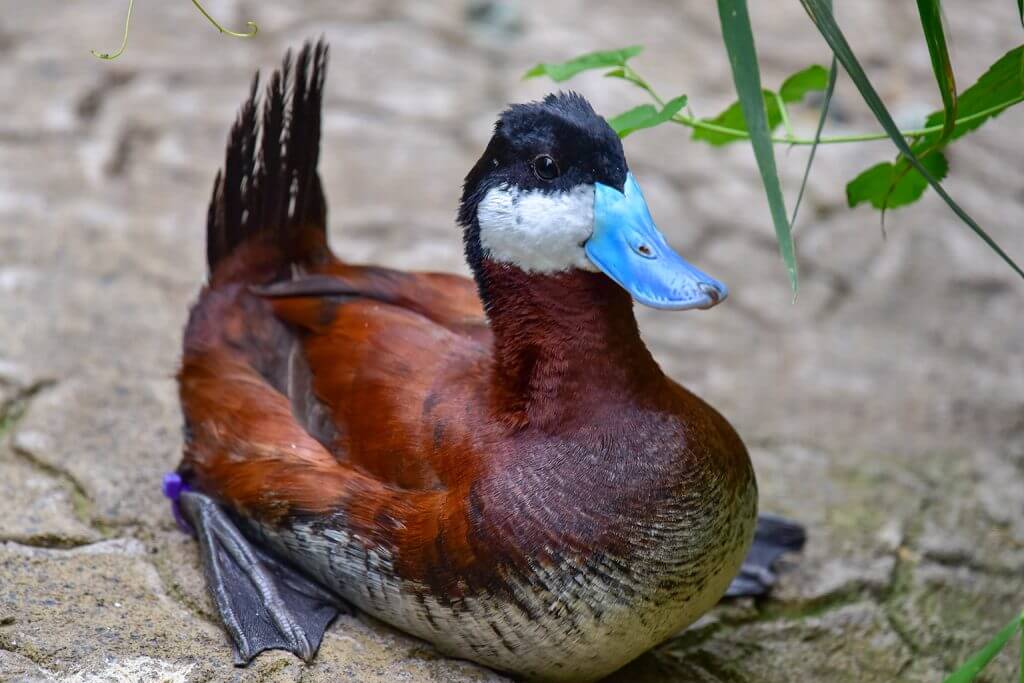
The Ruddy Duck is one of six extant species of the stiff-tailed ducks. Males in breeding season show a blackish cap that contrasts sharply with bright white cheeks, while females and young males have softer, pale cheek patches with a faint, blurred stripe.
They are sometimes nicknamed “butterballs,” a humorous reference to their compact, somewhat stocky appearance. Their short, stout build can make movements like walking or taking flight appear a little awkward. As a result, they rarely fly but when they do, they stay low over the water with rapid, whirring wingbeats.
Does the “butterballs” nickname sound funny or fitting? Discover how other duck species get their nicknames here: Nicknames of 130 Duck Species Around the World
14. Surf Scoter
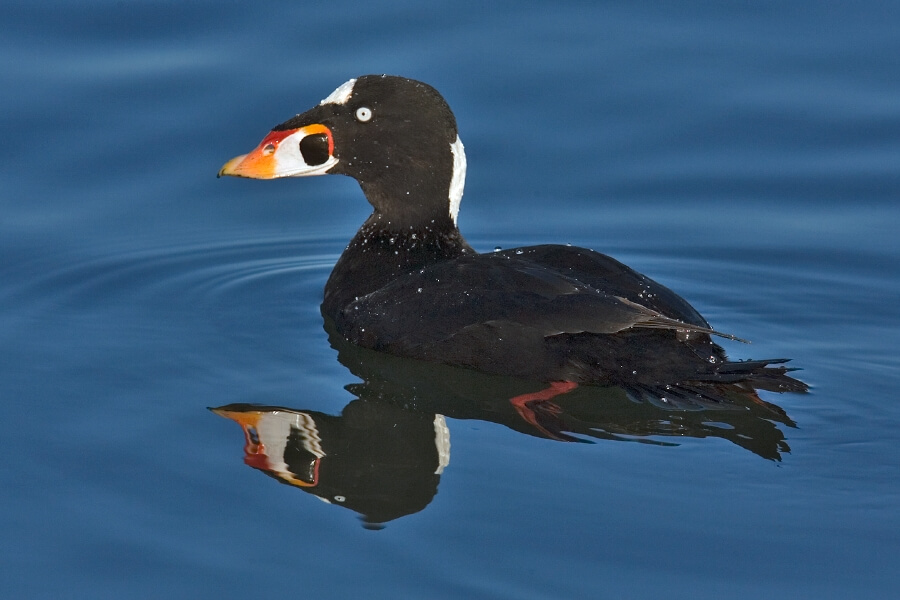
The Surf Scoter’s swollen and multicolored bill (marked with white, orange, red, yellow, and black near the base) makes it one of the strangest-looking ducks in the world. Adult males are mostly black, but their forehead and nape show bold white patches that stand out in sharp contrast. Females are browner, with paler cheek patches, but they have enough white hints on the head.
They breed in northern Canada and Alaska, then winter along the Pacific and Atlantic coasts of North America. Their diet consists mainly of benthic invertebrates, and like Common Eiders, mussels are their favorite food.
15. Blue-winged Teal
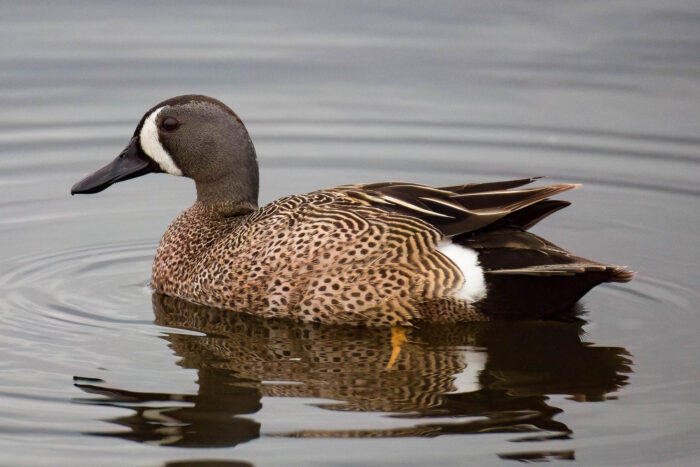
Male Blue-winged teals have greyish-blue heads with bold white facial crescents, which can appear almost black and white at a distance. Females are mottled brown, but show a pale whitish area near the base of the bill.
You’re more likely to spot them along shorelines than in open water, as they prefer calm waters or slow-moving currents rather than fast-flowing areas. Like many other dabbling ducks, they feed by dabbling (or tipping forward to forage) in shallow water at the edge of the marshes. Their diet consists mostly of plant matter, but they also sometimes eat aquatic insects and molluscs.
Female Blue-winged Teals look quite similar to female Mallards—but can you tell them apart? Here are their key differences: Blue-Winged Teal Vs Mallard: A Field Guide to Accurate Identification
16. Pacific Black Duck
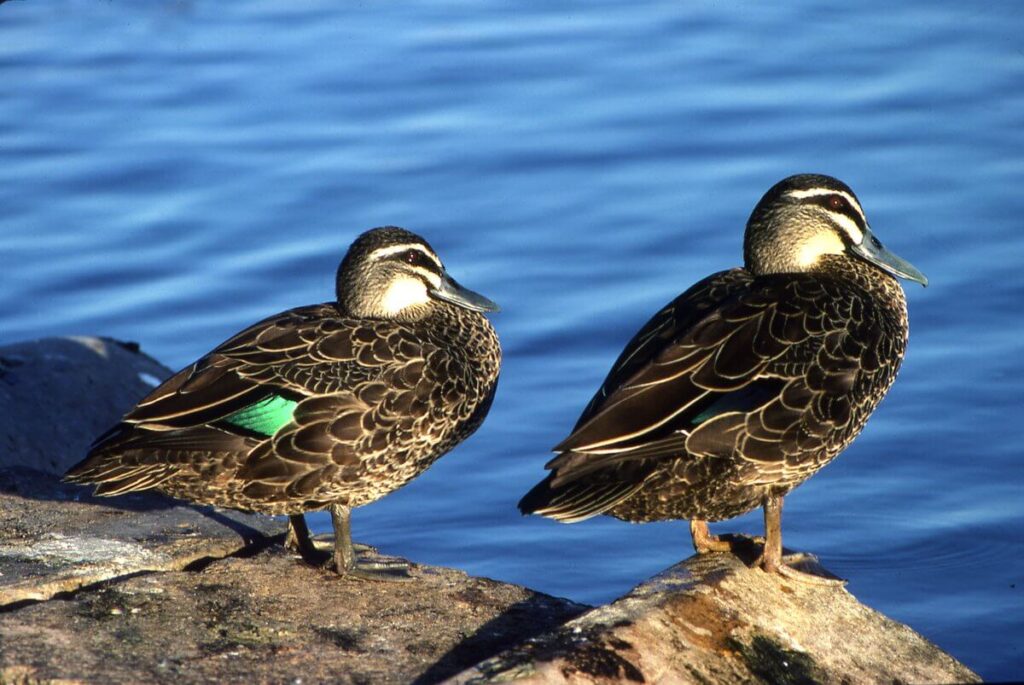
Common across much of Australia, Indonesia, New Guinea, New Zealand, and many islands in the southwestern Pacific, the Pacific Black Duck is another species that can be said to have a black-and-white head though the contrast is more subtle than in other duck species we’ve discussed so far.
It has a dark body and a paler head marked with a dark crown and distinct facial stripes. These create a gentle contrast that can give the head a soft black-and-white appearance, especially noticeable when the bird is gliding or in flight. Males are usually slightly larger than females, but both share this characteristic patterned head.
They are mainly vegetarian, feeding mostly on seeds and aquatic plants, though they sometimes supplement their diet with small crustaceans, molluscs, and aquatic insects.
17. Knob-billed Duck
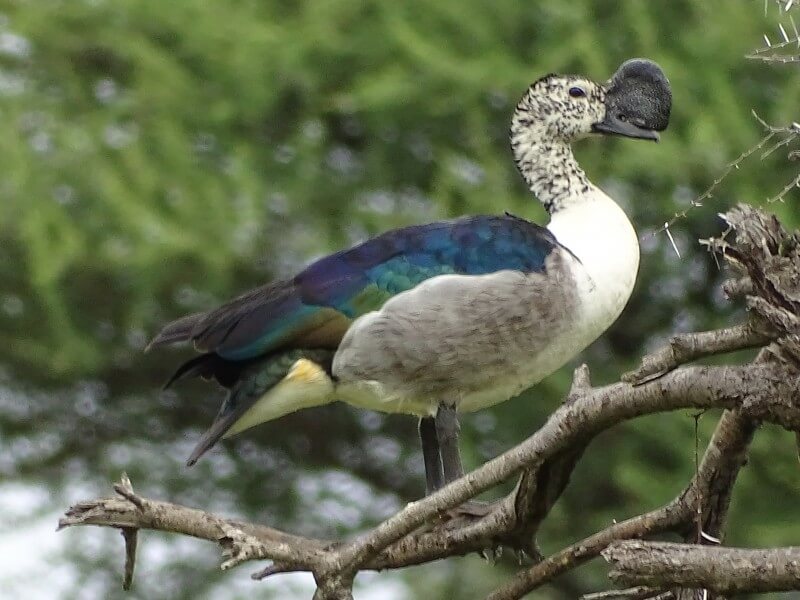
This is one of the largest duck species, measuring between 56 and 76 cm in length and weighing around 1.03 to 2.9 kg. They have white heads freckled with dark spots, which is why they’ve earned a place on this list.
Male Knob-billed Ducks are larger than females and have a distinctive large black knob on their bills. They are generally quiet birds, usually only giving low croaks when disturbed.
They are commonly found along tropical and subtropical wetlands and waterways across sub-Saharan Africa and Madagascar, as well as much of South Asia and parts of mainland Indochina.
18. Spot-billed Duck
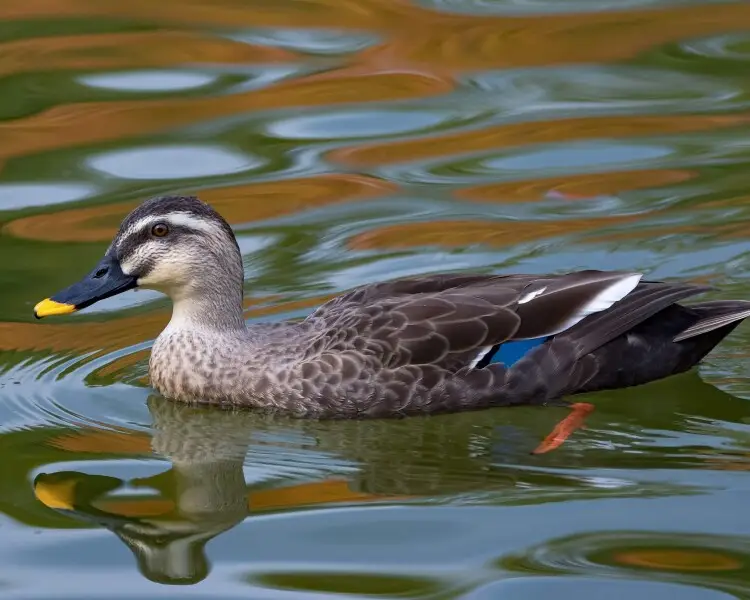
Named after the yellow spot on its bill, this is a dabbling duck species found mainly in East and Southeast Asia. Its overall plumage is mostly grey, with a paler head and neck. Like the Pacific Black Duck, the contrast in spot-billed duck‘s head is more subtle, but from a distance it can still appear black and white. It is a migratory species, wintering in southern China and sometimes in parts of Southeast Asia.
19. Puna Teal
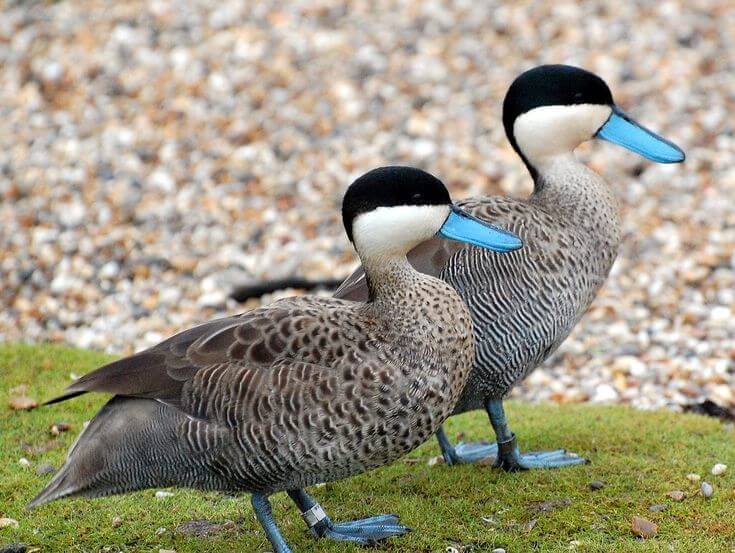
The Puna Teal is unmistakable, thanks to its distinctive head and bill pattern. Adult males have a black cap that extends below the eyes, contrasting sharply with the creamy-white lower face and neck. This bold two-tone look is paired with a light, coffee-colored body marked with dark spots.
They are also one of the few ducks with blue bills, featuring a black nail and culmen that make the bill even more distinctive. Females are generally duller in comparison.
This species is resident in the Andes of Peru, northern Chile, western Bolivia, and extreme northwestern Argentina. It has specialized respiratory adaptations for life at high altitudes, including larger lung volume and enhanced structures for gas exchange, allowing it to thrive in areas with less oxygen than usual.
20. Pink-eared Duck
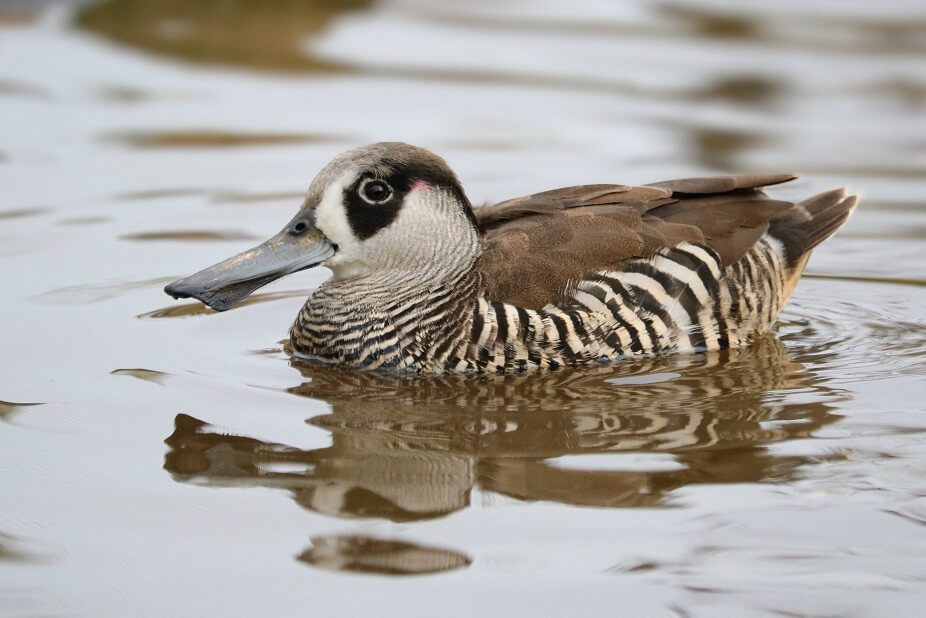
The final duck that also shows black-and-white head patterns is the Pink-eared Duck , an Australian duck species named after the small pink spot near the corner of its eye. Its head features dark stripes running across the face, broken by patches of bright white. Just behind the eye is a small blush-colored spot, which gives this duck its charming name.
It has a unique spoon-shaped bill, similar to the Northern Shoveler, with fine grooves along the sides, which are perfect for filtering tiny organisms from shallow water. Its body is softly patterned, with cinnamon-brown sides and fine grey-and-white barring. It mainly feeds on plankton, crustaceans, insects, and molluscs.